Festive Jewellery Trends
Karva Chauth Silver Trends Every Wholesaler Should Know Before the Season
 Oct 16, 2026
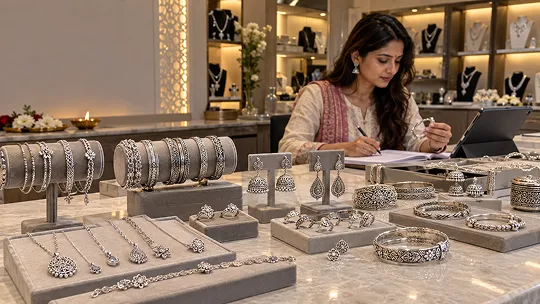
Karva Chauth has a strong traditional association with festive dressing, jewellery and rituals. While gold and diamond jewellery receive considerable attention during the occasion, silver can serve a different part of the market because it offers businesses opportunities across a wider range of designs and price points.
For wholesalers and retailers, the important point is not simply that jewellery demand may increase around the festival. The more useful question is:
Which products are commercially practical to stock before the demand arrives?
A good seasonal inventory should balance:
- Traditional designs with contemporary styles
- Everyday-wearable pieces with statement products
- Fast-moving core products with selected trend-led designs
- Different price and weight ranges
- Products that work specifically for Karva Chauth with products that remain sellable afterward
This reduces the risk of treating seasonal buying as a one-time opportunity.
1. Lightweight Silver Jewellery Is Worth Watching
One of the broader jewellery trends influencing festive buying is the preference for lighter, versatile jewellery that can be worn beyond a single occasion. Current 2026 jewellery coverage also points toward lightweight and versatile festive pieces.
For wholesalers, this has an important implication: seasonal stock does not necessarily need to be heavily elaborate.
Lightweight:
- Earrings
- Rings
- Pendants
- Chains
- Bracelets
- Bangles
can appeal to customers who want festive styling without purchasing a heavily ornamented set.
From a retail perspective, lighter products can also create more accessible price points. That can make them useful for stores serving customers with different budgets.
Business takeaway: Do not build a Karva Chauth collection entirely around heavy statement pieces. A balanced selection of lightweight products can give retailers more flexibility.
2. Traditional Designs Still Have Strong Seasonal Relevance
Festive jewellery trends may change, but traditional Indian jewellery motifs continue to have relevance during culturally significant occasions.
For Karva Chauth, retailers may therefore find value in designs that complement sarees, lehengas, suits and other traditional outfits.
Depending on the retailer’s customer base, relevant categories can include:
- Traditional earrings
- Bangles and kadas
- Pendants
- Necklaces
- Rings
- Payal and anklets
- Traditional chains
The key for a wholesaler is not to assume that every traditional design will sell equally well.
Instead, examine which categories have historically performed well with your customers and combine those dependable designs with a smaller selection of newer styles.
This is generally a more practical approach than replacing the entire inventory with seasonal designs.
3. Statement Earrings Can Add Visual Impact
Statement earrings deserve attention because they can transform a festive outfit without requiring a complete jewellery set.
Silver jhumka-inspired designs, larger earrings, textured patterns and contemporary statement silhouettes can work particularly well for customers looking for a noticeable festive accessory.
For retailers, earrings also have a practical advantage: customers can purchase them individually rather than committing to an entire set.
That makes the category useful across multiple price points.
For wholesale buyers, consider maintaining a mix of:
- Smaller everyday festive earrings
- Medium statement designs
- More elaborate occasion-focused pieces
This gives retailers more options when serving customers with different preferences.
4. Modern-Traditional Designs Can Broaden the Customer Base
A major opportunity for silver jewellery businesses is the space between traditional and contemporary design.
Modern consumers may want jewellery that looks appropriate for Karva Chauth but can also be worn during weddings, family functions, festivals or even selected everyday occasions.
This is where versatile designs become commercially interesting.
For example, a traditional-looking pendant with a cleaner silhouette may appeal to a customer who does not want an overly heavy ethnic look. Similarly, a contemporary silver ring can complement festive clothing without looking restricted to one occasion.
For wholesalers, this means versatility can be as important as trendiness.
A product that works for Karva Chauth and remains relevant for later festive or social occasions has potentially greater inventory value than a highly specific seasonal design.
5. Bangles, Kadas and Bracelets Deserve a Place in Seasonal Stock
Wrist jewellery naturally complements traditional Indian festive dressing, making bangles, kadas and bracelets relevant categories to evaluate before Karva Chauth.
However, retailers should avoid assuming that customers want only heavily detailed designs.
A useful assortment can include:
| Product Type | Stocking Consideration |
|---|---|
| Silver bangles | Traditional and contemporary options |
| Kadas | Bold designs alongside wearable styles |
| Bracelets | Lightweight and versatile pieces |
| Stackable styles | Useful for customers who like layered looks |
| Festive designs | Smaller quantity of stronger statement pieces |
The right combination depends on the retailer’s existing customer profile.
For wholesalers, the goal should be assortment rather than excessive quantity of one design.
6. Silver Jewellery Is Increasingly Being Bought Beyond One Occasion
Another important consideration for B2B buyers is that silver jewellery is no longer necessarily viewed only as an occasional purchase.
Recent industry coverage from IIJS Bharat Signature 2026 highlighted silver’s role in daily wear and gifting, with retailers evaluating the category through inventory movement and defined price ranges.
This matters during Karva Chauth because seasonal demand can introduce customers to products they may continue purchasing later.
For example, a customer who purchases a silver ring or bracelet for Karva Chauth may later purchase another piece for:
- Diwali
- Wedding functions
- Gifting
- Festivals
- Personal use
- Everyday styling
Therefore, retailers can benefit from choosing some Karva Chauth stock that has post-season selling potential.
7. Don’t Ignore Oxidised and Textured Silver Styles
Oxidised silver continues to have a strong presence in Indian jewellery, particularly in ethnic and fusion styling. Current 2026 trend coverage continues to highlight oxidised earrings, rings and statement pieces.
However, there is an important B2B distinction.
A trend being popular does not automatically mean every retailer should buy it in large quantities.
A wholesaler should consider whether the retailer’s customers actually purchase oxidised jewellery and whether the designs fit the store’s existing assortment.
Oxidised and textured styles can be particularly useful when a retailer wants to offer something different from polished, minimal silver jewellery.
What Should Wholesalers Consider Before Buying Karva Chauth Stock?
Trend reports can provide ideas, but purchasing decisions require more than knowing what looks fashionable.
Before placing a seasonal wholesale order, evaluate these factors:
1. Previous Sales Data
Look at which categories moved during the previous festive season.
Historical sales are often more useful than simply following a social-media trend.
2. Customer Profile
A retailer serving customers interested in traditional jewellery may need a different assortment from one targeting younger buyers seeking contemporary designs.
3. Weight and Price Range
Do not stock everything in one price bracket.
A broader range allows retailers to serve different customer budgets.
4. Product Variety
Instead of buying a very large quantity of a few designs, consider creating a balanced assortment across relevant categories.
5. Availability and Reordering
Seasonal demand can change quickly. Working with a supplier that can maintain consistent availability or support repeat sourcing can make inventory planning easier.
6. Product Versatility
Ask whether the product can sell after Karva Chauth.
This simple question can significantly improve seasonal purchasing decisions.
Common Mistakes Wholesalers Should Avoid
• Buying Too Much of One Trend
A design may look extremely popular online but have limited demand in a particular local market.
• Ignoring Existing Customer Behaviour
Your own sales history can reveal more about your customers than a general trend report.
• Focusing Only on Appearance
Commercially successful jewellery also needs suitable pricing, comfortable wearability, appropriate weight and reliable availability.
• Waiting Until the Last Minute
Seasonal buying involves product selection, supplier coordination, transportation and retail preparation. Last-minute purchasing can reduce design choices and create unnecessary pressure.
• Treating Karva Chauth as a Completely Separate Market
Products that can continue selling after the festival can reduce the risk associated with seasonal inventory.
A Smarter Way to Plan Silver Jewellery Inventory for Karva Chauth
A useful approach is to divide your seasonal buying into three groups:
• Proven Sellers
Products that already perform well with your customer base.
• Seasonal Opportunities
Traditional or festive designs specifically relevant to Karva Chauth.
• Trend Experiments
Newer designs purchased in controlled quantities to test customer response.
This structure provides a balance between predictability and experimentation. It also gives retailers useful sales information for the next festive season.
For manufacturers and wholesalers, maintaining variety across these three groups can make it easier for B2B buyers to build collections according to their individual markets. Aditi Ornaments serves B2B jewellery businesses across India and maintains a broad silver jewellery range, which can be relevant when buyers are comparing categories and planning seasonal assortments.
Conclusion
Karva Chauth presents an opportunity for silver jewellery businesses, but successful seasonal buying is about more than identifying the latest design trend.
For wholesalers and retailers, the stronger strategy is to combine customer knowledge, previous sales data, product variety, sensible price ranges and versatile designs. Traditional jewellery can provide festive relevance, while lightweight and contemporary pieces can help extend product demand beyond the occasion.
The most valuable question before placing a seasonal order is not simply “What is trending?” It is “What is likely to sell for my customers and what will still have value after the season ends?”
That shift from trend-following to informed inventory planning can make Karva Chauth buying more practical for a jewellery business.
Frequently Asked Questions (FAQ)
What silver jewellery is suitable for Karva Chauth?
Traditional earrings, bangles, kadas, bracelets, rings, pendants, necklaces and other festive silver jewellery can be suitable for Karva Chauth. The best selection depends on customer preferences, outfit styles, price range and local demand.
Should wholesalers buy heavy silver jewellery for Karva Chauth?
Not necessarily. A balanced inventory combining lightweight, medium and statement designs can be more practical than concentrating only on heavy jewellery. Lightweight and versatile products may also continue selling after the festival.
When should wholesalers start preparing for Karva Chauth?
Wholesalers should ideally begin planning well before the festival so they have enough time to evaluate previous sales, select products, coordinate with suppliers and arrange inventory. For 2026, Karva Chauth falls on 29 October.
What should retailers consider when buying Karva Chauth jewellery wholesale?
Retailers should consider customer preferences, product variety, price and weight ranges, stock availability, supplier consistency, expected demand and whether the products can continue selling after Karva Chauth.
Is silver jewellery suitable only for festive occasions?
No. Silver jewellery can serve both festive and everyday markets. This makes versatile silver products particularly useful for retailers who want seasonal inventory that remains commercially relevant beyond one festival.
How can wholesalers reduce the risk of unsold seasonal jewellery?
Avoid putting too much inventory into a single trend. Combine proven sellers with seasonal products and a smaller number of experimental designs. Reviewing previous sales data and choosing versatile products can also reduce inventory risk.
Why is supplier selection important for seasonal jewellery buying?
Seasonal demand creates tighter purchasing and delivery timelines. A reliable supplier can help businesses maintain product variety, stock availability and consistent sourcing while preparing for increased festive demand.
Share


Latest Blogs
Oct 16, 2026
Why You Should Buy Complete Silver Jewellery Range from One Trusted Manufacturer
For a jewellery business, buying silver jewellery is rarely just about finding attractive designs. A...
Read MoreOct 16, 2026
7 Key Things Wholesale Buyers Should Consider Before Choosing a Manufacturer
Choosing a jewellery manufacturer is not simply a matter of finding the lowest price. For...
Read MoreOct 16, 2026
What Silver Jewellery Sells Best Around Dhanteras? A Buying Guide for Wholesalers & Retailers
Dhanteras can accelerate the growth of a jewellery business almost overnight. Products that move steadily...
Read More